A wedding videography questionnaire should uncover the moments, people, audio and logistical constraints that shape the film. It should not be a copy of the photography questionnaire with “video” added to the title. A filmmaker needs to know where meaningful sound will happen, who may speak, which events are surprises and what kind of finished films the couple expects.
Use the 35 questions below as a template. Remove information already captured in the contract or shared production brief.
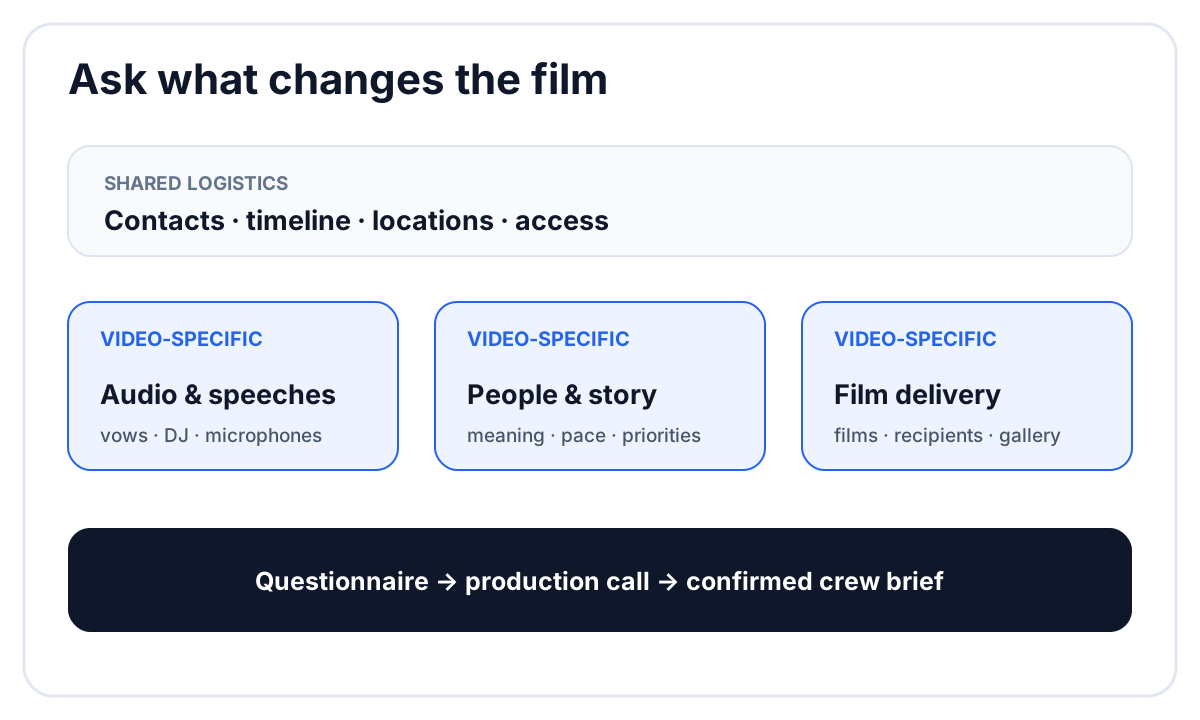 Video planning adds sound, story and edit expectations to the shared wedding logistics.
Contacts and creative context
- What names and pronouns should we use for each partner?
- Who is the best day-of contact for production questions?
- Is there a planner or coordinator? Please include contact details.
- What do you most want the film to help you remember?
- Are there people, relationships or traditions central to your story?
- Are there topics or moments you do not want emphasized in the film?
The final three questions guide editorial judgment. They are more useful than asking the couple to choose a vague style such as “cinematic.”
Wedding-day timeline
- When and where should video coverage begin?
- When should coverage end?
- Where will each partner get ready?
- Is there a first look, letter reading or private vow exchange?
- What time does the ceremony begin?
- What time are entrances, speeches, dances, cake cutting and the planned exit?
- Which parts of the timeline are still tentative?
- Are there surprises that the video team should know about but keep confidential?
Collect the schedule as time-and-event rows when possible. It lets the producer compare the client’s answer with the calendar and spot overlaps.
Ceremony, speeches and audio
- Will the ceremony use microphones or a venue sound system?
- Who can give the videographer access to the sound source?
- Are personal vows part of the ceremony?
- Will letters or private vows be read earlier in the day?
- Who is expected to give a speech or toast?
- Will any speech happen from an unexpected location?
- Is live music part of the ceremony or reception?
- Are there cultural or religious moments where camera movement or audio placement is restricted?
Audio access should be confirmed with the venue or DJ before the event. A questionnaire records the plan; it does not replace a technical conversation with the person operating the sound system.
Locations and access
- What are the full addresses for each location?
- Are there parking, loading, security or drone restrictions?
- Does any venue restrict tripods, lights, microphones or operator movement?
- How much travel time is planned between locations?
- Is transportation available for the video crew?
- Is there a safe place for cases, charging and media backup?
Do not promise drone coverage from a questionnaire answer. Permissions, weather, airspace and safe operation still determine whether it can happen.
Working with the photography team
- Who is the lead photographer?
- May the photo and video teams coordinate portrait timing before the wedding?
- Are there separate must-have moments for photography and video?
Photo and video usually share the same schedule but need different positions and sound access. A short pre-event coordination call prevents both teams from discovering conflicting plans during the ceremony.
Music and edit direction
- What emotional pace should the highlight film have: quiet, energetic, documentary or a mix?
- Are there musical genres or themes you strongly prefer or want to avoid?
- Which spoken moments should guide the story if the recordings are usable?
Treat song requests as direction, not an automatic promise to license a specific commercial track. The studio should choose music it can legally use in the delivered film.
Delivery
- Who should receive the final film delivery, and should it appear beside the wedding photographs?
The package and contract should already define film lengths, turnaround and revision terms. The questionnaire confirms the recipient and presentation rather than reopening the scope.
When to send the video questionnaire
Send the detailed form after booking and early enough to coordinate with the venue, DJ, planner and photographer. Set the deadline before the final production call.
Use this sequence:
- create the video project from the booking;
- send the questionnaire;
- review the answers for missing audio or access details;
- confirm restrictions with the responsible vendor;
- hold the production call;
- publish the final brief to the assigned crew.
If the studio also provides photography, share common answers such as contacts, locations and timeline. Keep film-specific audio and story questions in the video brief.
How FlowShot questionnaires fit the project
FlowShot questionnaire templates support short and long answers, single and multiple selections, yes/no fields, links, section dividers, follow-up questions and a day-timeline field. Each sent questionnaire creates a project-specific link, and the response remains connected to that project.
The client can save a browser draft before submitting. The studio receives the completed response and can turn confirmed details into the brief the crew uses. To follow up on an unanswered questionnaire, use Send again on the project’s questionnaire card.
For a combined studio, pair this form with the wedding photography questionnaire and share only the overlapping logistics. After editing and review, the approved film can be delivered through the wedding video delivery workflow.
FAQ
What should a wedding videographer ask a client?
Ask about the timeline, people and story priorities, ceremony audio, vows, speeches, locations, access restrictions, photography coordination, music direction and final delivery recipient.
When should I send a wedding videography questionnaire?
Send it after booking and before the final production call, while there is still time to confirm sound access and venue restrictions with other vendors.
Should photographers and videographers use the same questionnaire?
They can share contacts, locations and timeline information. Video needs additional questions about microphones, speeches, vows, music direction and the narrative priorities of the final film.
Should I ask the couple to choose the exact music?
Ask for genres, emotional direction and music to avoid. The filmmaker should use properly licensed music and explain whether specific song requests can be honored.
Do I need a questionnaire if I already have a planning call?
Yes. The questionnaire collects structured facts before the call. The call can then focus on conflicts, creative decisions and missing information rather than transcription.